“Am început anul cu suspendarea zborurilor din Israel, principala noastră piață externă,care a dus, în doar câteva săptămâni, la o scădere puternică a cererii. Am reușit să recuperăm în a doua parte a anului pentru că nu ne-am bazat pe o singură piață sau pe un singur canal de vânzare. Principala lecție a acestor nouă luni este că reziliența unui hotel vine din echilibru”, said Mirela Cojocaru, general manager of Hotel Cișmigiu.
After a slower start, the gap versus 2025 narrowed in Q2, and in Q3 accommodation revenues exceeded €360,000, surpassing the same period last year. August 2026 stood out with an occupancy rate of 68.6%, up from 60.4% in August 2025, and accommodation revenues nearly 14% higher. September was the quarter’s best month, posting almost 87% occupancy and an average daily rate approximately 2% above September 2025.
For the first nine months of 2026 the average occupancy rate was nearly 72%, while the average daily rate (ADR) rose by about 1.3% versus the same period in 2025. The core season from May to September drove growth: average occupancy over that period climbed to more than 78%, 2% higher than last year, with a peak of 91.5% in May. Accommodation revenues in the season increased by around 2% compared with 2025 and outperformed budgeted targets.
Between January and September 2026 Hotel Cișmigiu hosted guests from 89 countries, with international visitors accounting for roughly 85% of room nights. Israel remained the top foreign market at 20.6% of foreign room nights, down from 24.9% in the same period in 2025. The United States rose to second place with 8.8%, followed by the United Kingdom (8.1%), Germany (8%), Spain (5.3%), Italy (5.2%) and Turkey (4.5%).
The US market gain stems from expanded partnership with a major US online booking platform. Since July the share of bookings via this channel has grown, and in Q3 nearly one in five room nights came through the platform. American guests’ room nights increased by over 60% in Q3 and by almost 20% in the first nine months. This diversification reduced dependence on the top three source markets: while the top three accounted for nearly half of foreign room nights in 2025, their share fell below 40% in 2026.
Israel was the most affected market by the suspension of flights in March and April, when Israeli guests’ room nights dropped by nearly three quarters. Demand rebounded quickly after flights resumed, with increases of 50% in June and almost 25% in July compared with the previous year.
Romanian guests generated 14.5% of room nights in the first nine months, up from 13.7% a year earlier, leaving Romania as the second-largest country of origin after Israel. September 2026 was especially strong for the domestic market, with Romanian guests spending more than 20% more nights than in September 2025.
Average length of stay remained just above two nights, and double occupancy averaged about 1.5 persons per room, slightly below last year due to a higher share of business travel, which tends toward single occupancy. The balance between corporate and leisure segments stayed even, with a modest increase in business travel in Q3.
The hotel maintains its June forecast that the year will close about 2–3% below the objectives set at the start of the year, with the variance stemming from the first four months. October began positively with solid business and events demand, and confirmed bookings for the remainder of the quarter are in line with the same period last year. Because bookings are increasingly made closer to arrival dates, a significant portion of December occupancy is expected to confirm in the final weeks of the year. On staffing, the hotel reports a stable situation and does not face current difficulties, continuing to invest in a stable team.
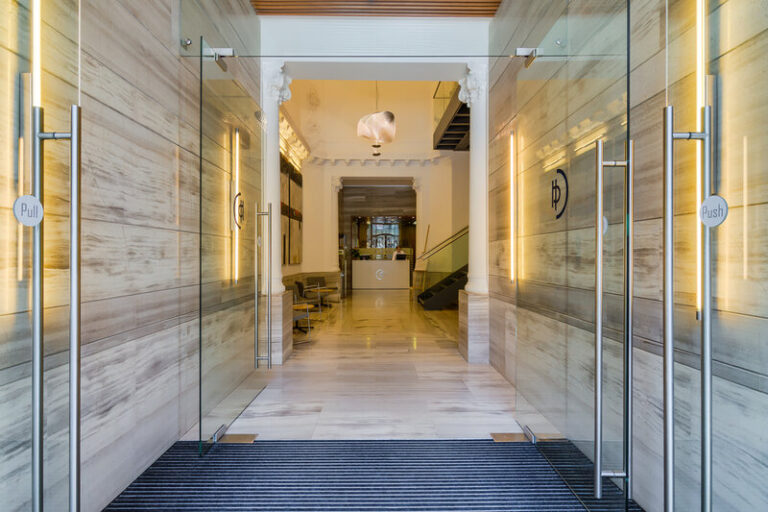
Hotel Cișmigiu comprises 60 apartments, five conference rooms with capacities ranging from 30 to 70 people, and an amphitheatre. The property also functions as a cultural hub, hosting the Humanitas Bookstore and the Instituto Cervantes.
1912 – Engineer Nicolae Pissiota began construction of the Palace Hotel, providing the structural design, while his cousin, architect Arghir Culina, handled the hotel’s conception and organization.
1913 – Palace Hotel, with 200 rooms, was inaugurated.
1941 – The famous Gambrinus Brewery opened on the Palace Hotel’s ground floor.
1948 – The hotel was nationalized and renamed “6 martie”.
1965 – The building received the name Hotel Cișmigiu.
1985 – The hotel closed due to deterioration.
1990 – The building became a student residence for the Theatre and Film Academy.
1995 – Hotel Cișmigiu closed again because of significant degradation.
2004 – Hercesa acquired Hotel Cișmigiu.
2012 – Following an investment of €15 million, Hotel Cișmigiu was reopened and returned to the tourism and cultural circuit.
Hercesa România celebrated two decades of activity in Romania in 2024, bringing experience and a track record of over 1,200 successfully delivered apartments in the Vivenda Residencias project. The company’s second major project is Stellaris Residencias.
In 2025, the year it celebrated its 50th anniversary, Hercesa delivered the 30,000th home in its portfolio, which includes residential units across Spain. The firm manages a workforce of more than 500 professionals and handles 800,000 square metres of land in industrial zones. Hercesa also develops and operates hotels, shopping centres, logistics spaces, office buildings and senior residences, and owns rental housing, tourist apartments and commercial spaces.