Since 1 January 2021, the EU has applied a own resource based on quantities of unrecycled plastic packaging waste: a uniform rate of €0.80 per kilogram, with adjustment mechanisms for certain member states. For Romania, this policy has translated into substantial transfers to the EU budget.
According to the Ministry of Finance, Romania’s contributions were: 568,441,792 lei in 2021; 967,520,790 lei in 2022; 1,076,896,768 lei in 2023; and 1,316,701,387 lei in 2024. For the period 1 January – 1 October 2025 the reported amount is 1,125,859,520 lei.
These payments total 5,055,420,257 lei, roughly equivalent to nearly €1 billion, underscoring the financial impact of unrecycled plastic on the national budget.
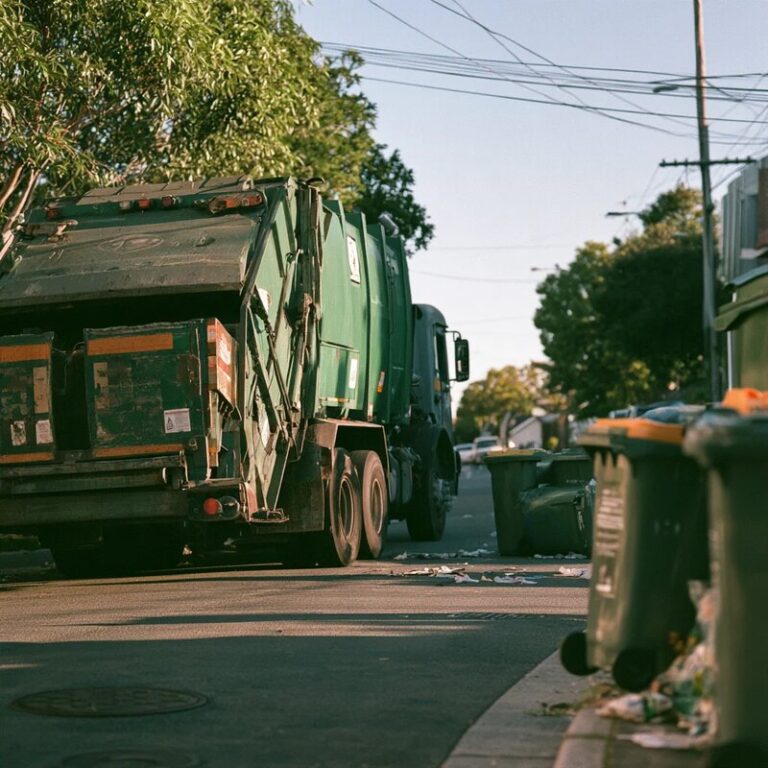
The authors highlight three main areas for intervention. First, separate collection must be effective and consistent: merely providing a bin or a yellow bag is insufficient if collections are irregular, fractions are later mixed, or citizens lack clear instructions about which packaging is accepted.
Second, material traceability from the waste generator to the recycling facility is needed. Collected, sorted, rejected and recycled quantities must be coherent and verifiable to demonstrate the conversion of waste into secondary raw material.
Third, all stakeholders — producers, organizations implementing extended producer responsibility, local authorities, waste operators, sorters and recyclers — should use compatible and comparable indicators. The distinctions between amounts placed on the market, those collected and those actually recycled must be clearly documented.
For firms placing packaged products on the market, costs stemming from unrecycled plastic underline the need for an approach that combines compliance with package design. Reducing weight, removing hard‑to‑separate components, using formats compatible with existing sorting infrastructure and increasing recycled content can lower risks and improve circularity, but decisions must be supported by technical data and the requirements specific to each packaging type.
Companies also need detailed records on material, weight, format, destination and sales channel of packaging — information essential for meeting extended producer responsibility (EPR) obligations and for preparing compliance with the new European rules on packaging and packaging waste.
The authors warn that the payment to the EU budget based on unrecycled plastic does not replace the need for investments in collection, sorting and recycling: the contribution paid does not automatically build local infrastructure nor solve the lack of traceability. The public objective should be to shrink the base that generates the contribution — fewer unnecessary packaging items, more effective separate collection and a higher quantity of plastic actually recycled.
The nearly €1 billion paid for the period 1 January 2021 – 1 October 2025, the authors say, is a clear measure of the cost of inaction.
Opinions by Adrian Teampău, Director, Environmental Taxes and Circular Economy, and Anca Andrei‑Cimbru, Manager, Environmental Taxes and Circular Economy, Romania
About the authors’ organisation: the team works on environmental taxation and circular economy issues in Romania, providing analysis and proposals related to waste management, extended producer responsibility and policy measures aimed at improving recycling rates and material traceability.