
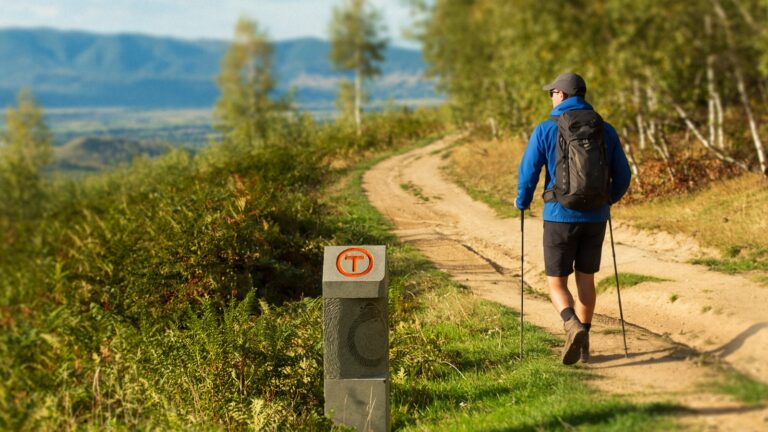
MedLife, in partnership with Tășuleasa Social Association, announces the launch of an observational study conducted on Via Transilvanica, built around the concept of Good Stress (eustress)—a principle increasingly recognized in lifestyle medicine and longevity research, which suggests that controlled exposure to physical and mental challenges can activate the body's natural adaptive mechanisms and contribute to greater physical and emotional resilience.
The study aims to assess the impact of long-distance walking on both physical and emotional health in a real-life setting of sustained physical effort. Researchers will examine how the body responds to prolonged walking in nature by analyzing biological markers, as well as changes in wellbeing, energy levels, perceived stress, and emotional state.
The initiative is part of MedLife's broader commitment to generating meaningful data for preventive and lifestyle medicine and is based on the conclusions of a recent nationwide study conducted by the company on Romanians' perceptions of physical activity.
The quantitative research, conducted by Unlock Research in May 2026 at MedLife's request, revealed a striking paradox. Although Romanians acknowledge the importance of physical activity for maintaining good health, increasingly sedentary lifestyles continue to dominate daily routines. More than half of respondents (56%) stated that they spend most of their working day sitting down. One in four respondents (26%) reported regularly walking longer distances, while only one in eight Romanians (12%) said they routinely go hiking or complete nature trails.
The study also showed that the benefits of walking are still perceived primarily through the lens of physical health. Its positive effects on emotional wellbeing and psychological resilience remain less widely recognized, despite the fact that people who hike regularly report higher energy levels, greater overall wellbeing, and an increased ability to cope with everyday challenges.
Building on these findings, MedLife is launching an observational study that combines sociological research methods with the assessment of biological parameters in order to complement perception data with real-world observations. The study will evaluate how both the body and emotional wellbeing respond to an extended walking experience in nature.
Conducted on Via Transilvanica, the study will examine the changes observed before and after participants complete sections of the trail, combining the analysis of relevant health biomarkers with qualitative sociological research based on in-depth interviews. The project's objective is to better understand how the Good Stress experience—generated by the combination of sustained physical effort, authentic contact with nature, and stepping away from everyday routines—can influence physical health, emotional wellbeing, and participants' overall quality of life.
According to specialists, eustress, or beneficial stress, is a physiological response that differs fundamentally from chronic stress. It occurs when the body is exposed to controlled challenges that remain within its adaptive capacity. Scientific literature indicates that such experiences can activate natural adaptive mechanisms and contribute to the development of both physical and psychological resilience.
"In medical practice, we frequently discuss the negative effects of chronic stress. However, there is another type of physiological response—the beneficial form of stress known as eustress. It occurs when challenges are sufficiently demanding to activate the body's adaptive mechanisms without exceeding its capacity to cope with them. Sustained long-distance walking in nature over several consecutive days may represent exactly this kind of stimulus. Through this project, we aim to better understand how the body responds to such an experience and to generate valuable data that will contribute to the advancement of preventive and lifestyle medicine," said Dr. Nicolae Marcu, Medical Operations Director, MedLife Group.
Starting today, MedLife is launching the recruitment process for participants who wish to take part in the observational study conducted on Via Transilvanica.
The project is open to all individuals aged 18 and over who wish to undertake a walking experience on Via Transilvanica lasting at least 10 days and covering a minimum distance of 150 km. Participants are free to choose their own starting point, walking pace, and destination, according to their preferred itinerary. By enrolling in the study, they will contribute to a research initiative designed to better understand how this form of physical activity influences health.
Participants enrolled in the project will receive complimentary medical testing before and after completing their route. They will also take part in in-depth interviews conducted by qualitative research specialists, exploring the emotions, motivations, challenges, personal insights, and transformations experienced throughout the journey.
As a token of appreciation for their commitment and participation, those who successfully complete at least 10 days on the trail will also receive complimentary access to MedLife's Longevity100+ genetic testing programme.
Registration is open until mid-September, and all information regarding eligibility criteria and the stages of the project is available on the study's dedicated webpage: www.medlife.ro/stresul-bun-via-transilvanica.
Through this project, MedLife aims to support research in preventive medicine and lifestyle medicine at a time when behavioural change is becoming an essential component of long-term health.
"The results of our quantitative study on lifestyle and Romanians' relationship with physical activity showed a significant gap between what we know about the importance of movement and how we actually behave. This project is the natural next step: we are transforming perceptions into real-world data and seeking to understand whether something as accessible as long-distance walking can become a genuine ally of prevention. We believe that the medicine of the future is not only about treating disease but also about understanding the behaviours that help keep us healthy," said Ina Bădărău-Ilie, Communications Director, MedLife Group.
Through this collaboration, Via Transilvanica becomes the setting for a study dedicated to understanding how long-distance walking in a natural environment influences both physical and emotional health. Choosing one of Europe's most important long-distance trails as the location for this MedLife observational study reflects the shared belief that nature and movement can play a significant role in supporting health and overall wellbeing.
"From the very beginning, Via Transilvanica was conceived as a trail that invites people to slow down, reconnect with nature, and rediscover themselves. We are delighted that this experience is now gaining a scientific dimension through a partnership capable of generating valuable insights into the benefits of long-distance walking. We believe the results of this study will contribute not only to promoting an active lifestyle but also to strengthening the role and impact that Via Transilvanica has on public health," said Alin Uhlmann Ușeriu, President of the Tășuleasa Social Association.
The MedLife observational study will take place between August and September 2026 across any of the regions of Via Transilvanica, depending on each participant's chosen route. The study will include medical tests and emotional wellbeing assessments conducted before participants begin the trail, followed by a reassessment after completing their journey.
The collected data will be analysed anonymously by the MedLife medical team to evaluate how long-distance walking in a natural environment influences relevant indicators of physical and emotional health, as well as the body's adaptive mechanisms in response to sustained physical effort and what scientific literature defines as eustress, or "good stress."
Individuals interested in participating can register at www.medlife.ro/stresul-bun-via-transilvanica, where they will find complete information regarding eligibility criteria, the project timeline, and all study stages.